Yosemite National Park: A Complete Guide to America’s Natural Wonder
Introduction
Nestled in the Sierra Nevada mountains of California, Yosemite National Park stands as one of the most breathtaking natural wonders in the United States. With its towering granite cliffs, majestic waterfalls, ancient sequoias, and diverse ecosystems, this iconic destination has captivated visitors for generations. Whether you’re an avid hiker, photography enthusiast, or simply someone seeking to connect with nature, Yosemite offers an unforgettable experience that combines awe-inspiring landscapes with rich natural history.
In this comprehensive guide, we’ll explore everything you need to know to plan your perfect Yosemite adventure, from must-see attractions to practical tips that will enhance your visit.
Overview of Yosemite National Park
Established in 1890, Yosemite spans nearly 1,200 square acres and welcomes over 4 million visitors annually. The park is renowned for its spectacular granite cliffs, including the iconic El Capitan and Half Dome, as well as some of the tallest waterfalls in North America. Designated as a UNESCO World Heritage Site in 1984, Yosemite represents a significant example of Earth’s geological formations and biological diversity.
The park’s varied elevation creates a mosaic of habitats, from low-elevation meadows to alpine wilderness, supporting more than 400 species of vertebrates and thousands of plant species.
Iconic Landmarks and Attractions
Yosemite Valley
The heart of the park, Yosemite Valley stretches 7 miles long and 1 mile wide, offering iconic views that have inspired artists and photographers for decades. Key viewpoints include:
-
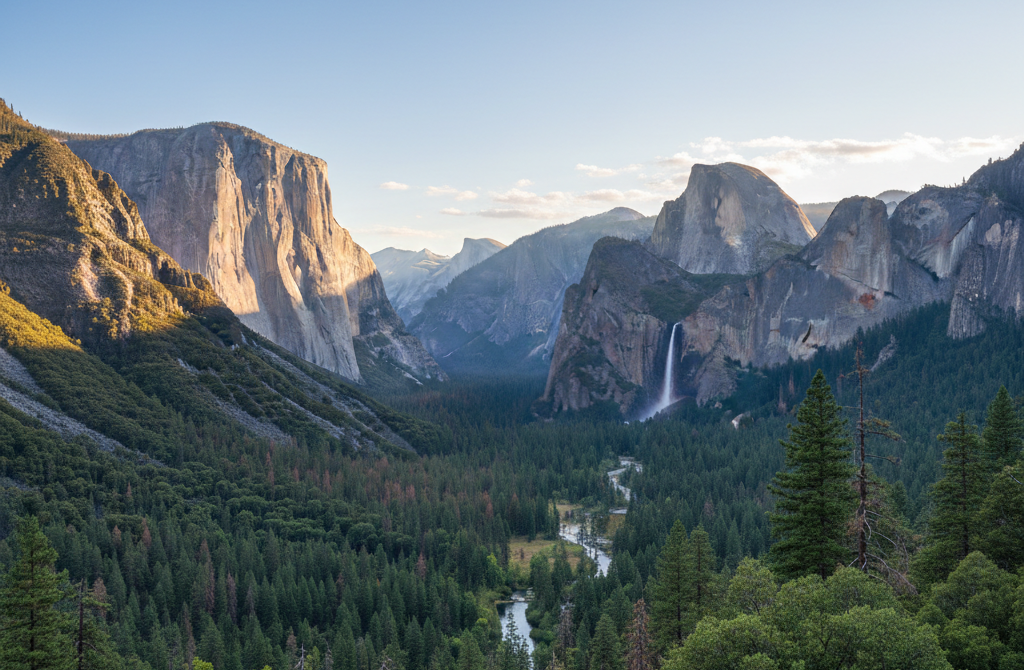
Tunnel View: One of the most photographed vistas in Yosemite, offering sweeping views of Yosemite Valley, El Capitan, Bridalveil Fall, and Half Dome.
-
Bridalveil Fall: A 620-foot waterfall that flows year-round, particularly spectacular in spring when snowmelt swells its volume.
-
Yosemite Falls: One of the tallest waterfalls in the world at 2,425 feet, consisting of three sections: Upper Yosemite Fall, the middle cascades, and Lower Yosemite Fall.
El Capitan
This massive granite monolith rises 3,000 feet from the valley floor and is renowned worldwide for rock climbing. The “Nose” route on El Capitan is considered one of the most challenging climbs in the world.
Half Dome
Perhaps Yosemite’s most recognizable feature, Half Dome’s distinctive shape makes it a must-see landmark. For those up to the challenge, the hike to Half Dome’s summit offers one of the most rewarding experiences in the park.
Glacier Point
Perched 3,200 feet above Yosemite Valley, Glacier Point provides breathtaking panoramic views of the High Sierra and Yosemite Valley. The viewpoint is accessible by car during summer months.
Mariposa Grove
Home to over 500 mature giant sequoias, including the famous Grizzly Giant, Mariposa Grove offers a glimpse into these ancient trees’ majesty. The “California Tunnel Tree,” once passed through by stagecoaches, still stands as a testament to the grove’s history.
Activities for Visitors
Hiking Trails
Yosemite offers trails for every fitness level:
- Easy: Lower Yosemite Fall Trail (1 mile round trip), Cook’s Meadow Loop (1 mile)
- Moderate: Vernal Fall Footbridge (2.4 miles round trip), Mist Trail (2.7 miles round trip)
- Challenging: Half Dome Trail (14-16 miles round trip), Mount Hoffman (5.4 miles round trip)
Rock Climbing
With its world-class granite formations, Yosemite is a mecca for rock climbers. El Capitan, Cathedral Rocks, and Washington Column offer challenges for climbers of all abilities.
Wildlife Viewing
The park is home to black bears, mule deer, coyotes, bobcats, and numerous bird species. Remember to observe wildlife from a safe distance and never feed animals.
Photography Opportunities
From sunrise at Tunnel View to sunset over Half Dome, Yosemite provides endless photographic inspiration. The changing light throughout the day transforms the landscape, offering unique perspectives at different times.
Best Times to Visit
Spring (April-June)
Waterfalls are at their most spectacular, with wildflowers blooming in meadows. Some higher elevation areas may still be closed due to snow.
Summer (July-September)
All park areas are accessible, with longer daylight hours. This is peak season, so expect larger crowds and plan accordingly.
Fall (October-November)
Fall colors emerge in the meadows and lower elevations, with fewer crowds than summer. Weather becomes increasingly variable.
Winter (December-March)
Yosemite Valley remains accessible, with occasional snowfall creating a serene, magical landscape. Some higher elevation areas may be closed.
Practical Information
Getting There
By car:
- From San Francisco: approximately 4 hours (200 miles)
- From Los Angeles: approximately 6 hours (300 miles)
- From Las Vegas: approximately 7 hours (450 miles)
By public transportation:
- Amtrak to Merced, then Yosemite Area Regional Transportation System (YARTS) bus to the park
Entrance Fees and Passes
- $35 per vehicle (valid for 7 days)
- $20 per person (motorcycle or bicycle)
- $70 annual pass (America the Beautiful Pass)
Accommodations
- Inside the park: Yosemite Valley Lodge, Ahwahnee Hotel, Curry Village, Wawona Hotel
- Outside the park: Numerous options in gateway communities like Mariposa, Groveland, and Oakhurst
What to Pack
- Layered clothing (mountain weather changes rapidly)
- Sturdy hiking shoes
- Sun protection (hat, sunglasses, sunscreen)
- Reusable water bottles
- Bear canister for food storage
- Camera and extra batteries
Conservation and Sustainable Tourism
Yosemite faces environmental challenges from climate change and visitor impact. As visitors, we can help preserve this treasure by:
- Following Leave No Trace principles
- Staying on designated trails
- Properly storing food to avoid attracting wildlife
- Using reusable containers to minimize waste
- Participating in volunteer programs when possible
Conclusion
Yosemite National Park offers a profound connection to nature that few places can match. Whether you’re standing in awe of Yosemite Falls, gazing up at Half Dome, or quietly observing wildlife in a meadow, the park’s beauty and grandeur create lasting memories.
By planning ahead and respecting the natural environment, you can experience Yosemite at its best while helping to preserve it for future generations. Start planning your adventure today and discover why this extraordinary place continues to inspire wonder in all who visit.
Have you visited Yosemite? Share your experiences and tips in the comments below!
Plan your Yosemite adventure with our comprehensive guides to other national parks, or explore our collection of outdoor photography tips to capture the perfect shot on your next trip.